

SSL certificate is a digital security certificate that encrypts all data traffic between your website and your visitors. SSL (Secure Sockets Layer) and its modern version TLS (Transport Layer Security) are the cornerstone of secure communication on the internet.
The 🔒 lock icon and HTTPS protocol you see in the address bar of your browser indicates that that site has an SSL certificate. So what exactly does SSL do and why is it so important?
What Does SSL Certificate Mean?
SSL certificate is a digital identity document. Just like an identity card identifies you, an SSL certificate verifies your website's identity and shows your visitors that the connection is really made with this site.
Technically, the SSL certificate contains the following information:
- Certificate owner (domain or organization) information
- Information of the Certificate Authority (CA) that issued the certificate
- Public key used for encryption
- Validity dates of the certificate
- Digital signature
How Does SSL Work?
SSL certificate works on the principle of asymmetric encryption. When your browser connects to an HTTPS site, the following process occurs:
- Hello (Handshake): Browser sends connection request to server
- Certificate Presentation:The server sends the SSL certificate to the browser
- Verification: The browser checks that the certificate is signed by a trusted CA
- Key Exchange: Browser and server create a common encryption key
- Secure Communication: All data traffic is encrypted with this key
This entire process takes place within milliseconds and the user does not feel any delay.
Difference Between HTTP and HTTPS
| Feature | HTTP | HTTPS |
|---|---|---|
| Data Encryption | ❌ None | ✅ 256-bit AES |
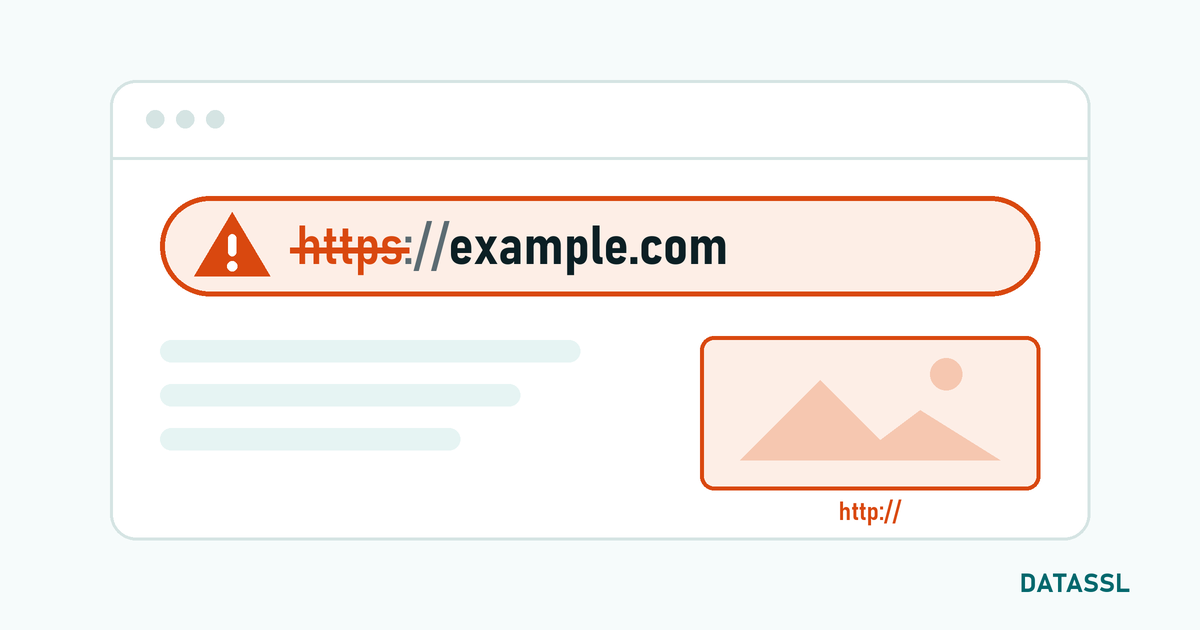
| Browser Warning | "Not Secure" | 🔒 Lock Icon |
| SEO Impact | No signal | Lightweight ranking signal |
| Port | 80 | 443 |
| User Trust | Low | High |
SSL Certificate Types
DV SSL (Domain Validation)
Only verifies domain ownership. It activates within minutes. Ideal for personal sites, blogs and small projects. It is the most affordable option.
OV SSL (Organization Validation)
Verifies organization information as well as domain ownership. Recommended for company websites and corporate projects. The company name is displayed in the certificate details.
EV SSL (Extended Validation)
It has the most comprehensive verification process. It is often preferred by banks, financial institutions and large e-commerce sites. Provides the highest level of identity validation; the organisation name is shown in the certificate details.
Wildcard SSL
Protects the main domain and all subdomains with a single certificate. For example, with *.example.com, all subdomains such as mail.example.com, blog.example.com are secured.
Multi-Domain (SAN) SSL
Protects multiple different domains with a single certificate. It is a cost-effective solution for businesses that manage multiple websites.
What Happens Without an SSL Certificate?
Websites that do not use SSL certificates face serious risks:
- Browser Warning: Chrome, Firefox and other browsers display "Not Secure" shows warning. This warning can cause many visitors to leave the site.
- Data Security Risk: Unencrypted data (passwords, credit card information) may be intercepted by third parties.
- SEO Loss: Google uses HTTPS as a lightweight ranking signal. Sites without SSL cannot benefit from this signal.
- Legal Issues: Regulations such as KVKK and GDPR require appropriate technical measures for personal data; encryption in transit is one of the most basic of these measures.
- Loss of Trust: Visitors will not shop or fill out forms on a site that appears unsafe.
Frequently Asked Questions
What does SSL certificate mean?
An SSL certificate is a digital security document that verifies the identity of a website and encrypts data communication between the site and the visitor.
What happens if there is no SSL certificate?
Browsers show a "Not Secure" warning, you cannot benefit from Google's HTTPS ranking signal, user data is at risk and visitor trust is lost.
Are SSL and TLS the same thing?
TLS is the updated and more secure version of SSL. The protocol used today is actually TLS, but it is still referred to as "SSL" in the industry. The term is widely used.
Conclusion
The SSL certificate is an indispensable security component of the modern internet. You need an SSL certificate to protect visitor data in transit, gain visitor trust and benefit from the HTTPS signal of search engines.
Check out our SSL certificate products and find the most suitable solution for your site now.


Yorumlar
No comments yet. Be the first to comment!
Yorum Yaz