Detailed guide in which we explain all the steps to install the SSL certificate on your web server, from creating CSR to installing the certificate.
📋 Contents
- Basic Concepts and Requirements
- Step by Step Application Guide
- Common Problems and Solutions
- Advanced Configuration and Optimization
- Best Practices and Checklist
Basic Concepts and Requirements
SSL How to Install Certificate? To understand the Step by Step Guide, we first need to look at the basic concepts. SSL (Secure Sockets Layer) and its more modern version, TLS (Transport Layer Security), are security protocols that encrypt data communication on the internet.
These protocols encrypt the data flow between your web browser and the server, preventing sensitive information such as credit card information, passwords and personal data from being intercepted by third parties.
Today, all modern web browsers mark sites that do not use HTTPS as "Not Secure". This seriously negatively affects visitor trust.
📌 Important: Google has used HTTPS as a lightweight ranking signal since 2014; not using HTTPS does not by itself mean a heavy penalty.
Step by Step Application Guide
Here are the steps you need to follow in this regard:
- Planning: Determine which type of certificate you need. Do you need a single domain, wildcard or multi-domain?
- CSR Creation: Create the Certificate Signing Request (CSR) file on your server. This is a request file sent to the certificate authority.
- Certificate Purchasing: Purchase the SSL certificate that suits your needs through DataSSL.
- Domain Verification: Certificate Complete the authority verification process (email, DNS or file verification).
- Setup: Upload the downloaded certificate files to your server.
- Test: To verify the installation. Use SSL checker tools.
Following each step carefully is critical for a smooth installation process. Make sure that the domain name information is entered correctly, especially during the CSR creation phase.
Note that after the installation is completed, 301 redirect rules must be added to redirect all HTTP traffic to HTTPS. .htaccess is used on Apache servers, and server block configuration is used on Nginx.
Common Problems and Solutions
You may encounter various problems during SSL certificate installation and management. Here are the most common problems and their solutions:
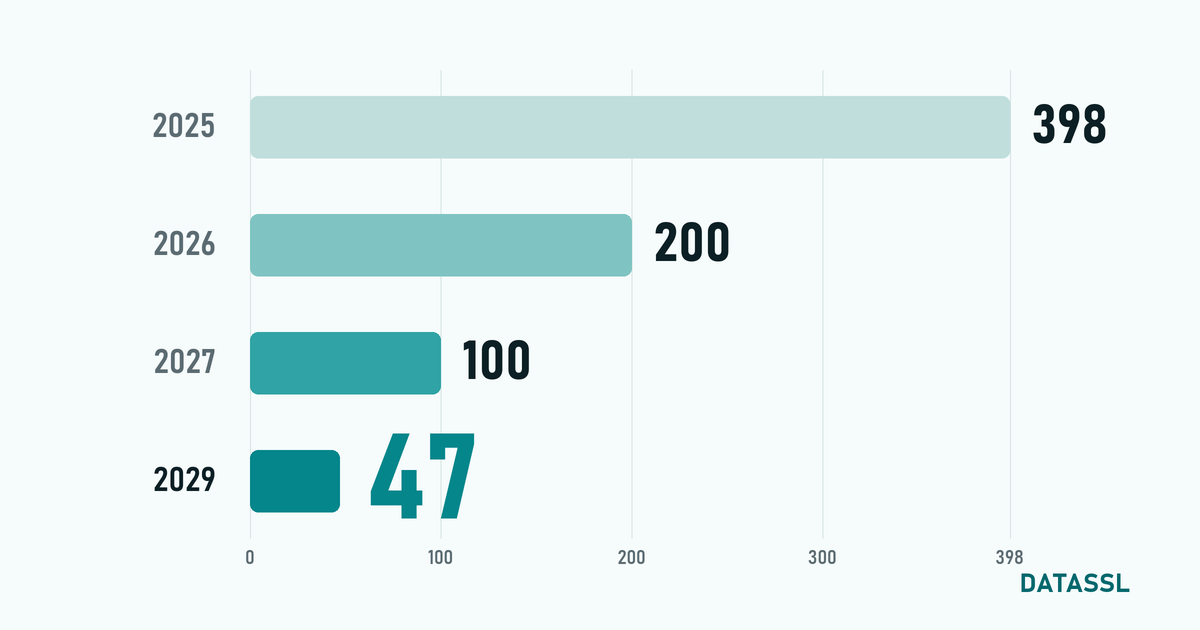
1. Certificate Chain Error: Occurs as a result of incomplete installation of Intermediate certificate files. Make sure to also upload the CA Bundle file provided by the certificate authority to the server. 2. Mixed Content Warning:This warning appears if the page is loading over HTTPS but some resources (image, CSS, JS) are still pulled over HTTP. Update all resource URLs to HTTPS. 3. Certificate Expiration:SSL certificates have an expiration date (at most 200 days since 15 March 2026). Renewal must be made before the period expires. Installing automatic renewal systems avoids this problem. 4. Domain Mismatch: If the domain name for which the certificate is issued does not match the domain name of the website, the browser displays a security warning. Make sure www and non-www versions are also considered.
Advanced Configuration and Optimization
Beyond the basic setup, optimizing your SSL configuration provides great benefits in terms of both security and performance.
TLS 1.3 Activation: The latest TLS version, 1.3, offers faster handshakes and improved security. Enable your server's TLS 1.3 support and disable legacy protocols (TLS 1.0, 1.1). HSTS Header: Force browsers to always connect to your site over HTTPS by adding the HTTP Strict Transport Security header. Being added to the preload list provides extra security. OCSP Stapling: Enable OCSP Stapling to speed up the certificate verification process. This can shorten connection setup time. Perfect Forward Secrecy: Make sure past traffic cannot be decrypted in the future by making ECDHE cipher suites a priority.
Best Practices and Checklist
Follow these best practices to succeed:
- ✅ Always 2048-bit or higher Use RSA key or 256-bit ECC key
- ✅ Follow the certificate duration, renew at least 30 days before it expires
- ✅ Certificate to cover all subdomains plan
- ✅ Aim for an A+ grade in SSL Labs testing
- ✅ Configure HSTS and CSP security headers
- ✅ Set up HTTP to HTTPS 301 redirect
- ✅ Check for mixed content issues regularly
- ✅ Use a certificate monitoring tool
Regularly reviewing this checklist helps keep your SSL configuration up to date.
Conclusion
In this article How to Install an SSL Certificate? We have covered the topic Step by Step Guidein depth. SSL/TLS security is one of the cornerstones of modern web infrastructure and every website owner should give due importance to this issue.
As DataSSL, we continue to offer the highest quality SSL certificates at the most affordable prices for a secure internet experience. You can contact our technical support team 24/7 for your questions. Buy your SSL certificate from DataSSL. Installation guides, support by phone, email and ticket; refund if cancelled within 30 days. Check Their Certificates →